WORKSHOP ON THE ROAD
Department of Transport and Main Road (QLD) and Bureau of Meteorology discovery workshop, aimed to explore areas of opportunities and partnerships.
Background
The workshop held at the Department of Transport and Main Road facilities in Brisbane. It was designed as a full day workshop involving stakeholder from Department of Transport and Main Road (TMR) and Bureau of Meteorology (BOM) with the below objective:
To understand services that TMR provided
To understand services that TMR provided
To explore area of opportunities and business for both TMR and BOM
Deliverables
Journey & Services map showing pain points and potential area of opportunities
Planning
Together with agile lead, we planned our approached. I was looking at it from design thinking point of view and the agile lead from scrum facilitation angle. Knowing and understanding the audience is crucial. The workshop was attended by different stakeholder, many never heard of Design thinking method or agile and working in silos. Knowing this in mind, we designed an ice breaking activity. When designing the workshop, we break the activities into smaller chunks and time box it.
Introduction activity - the bear
Using the bear card, we asked each participant to introduce themselves and tell us how they feel about being in the workshop.
Activity 1 - Yes, But vs Yes, And
Purpose: To demonstrate collaboration work, showing the difference between an open and closed mindset
Define the scenario
We’re organising a 40th birthday party our best friend. The first person starts with a few sentences about the party, beginning with “We’re organising a 40th party for our friend which will……”
Go around the circle, with each person adding to the idea by saying “Yes BUT”
Do the same, but try “Yes AND”
“Yes, but we don’t have enough drinks for everyone”
demonstrated the “Yes, but” mindset will stopped progress in the party planning
“Yes, and we can ask everyone to bring more snacks!”
demonstrated the “Yes, and” mindset will bring solution to a problem
Activity 2 - Roles Swap
Purpose: Getting to know TMR/BOM as an organisation and to understand the services TMR/BOM provide
Round 1
Form 2 teams: BOM staff & TMR staff on opposite sides of the room / different walls
Each team brainstorms what the other agency does:
TMR will brainstorm what BOM does. BOM activities should go on BLUE post its.
BOM will brainstorm what TMR does. TMR post its should go on a different colour per sector. Eg: Roads GREEN, rail ORANGE etc.
Have TMR to present back and BOM team to present back (of what they think of what each other do)
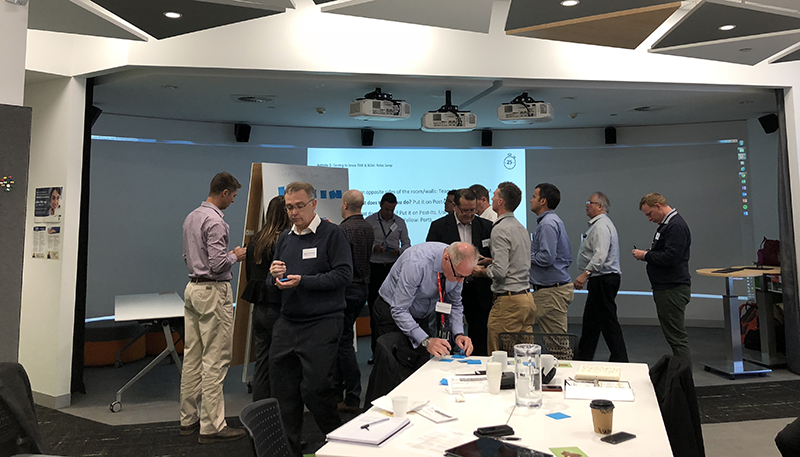
Round 2:
TMR and BOM teams will swap to go to the walls that list their services and review the post its.
TMR and BOM teams fill in the gaps on their own service wall.
Both team present back the gaps on the the other services that they do.
Activity 3.1 - BOM products & services
Purpose: To get to know BOM Products and understand that BOM provides services that can support decision making at multiple timescales - daily, weekly, 3 monthly etc.
BOM staff to organise the BOM post-its (products) within the time scale above and also place additional post is if needed and place them in time scale.
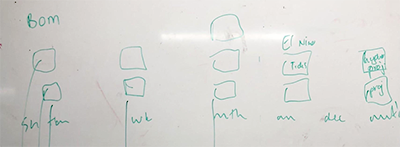
Activity 3.2 - TMR activity & services
Purpose: To understand the process within TMR (day to day and/or planning - short term and/or long term)
Split the TMR participants based on their sector (or the sector they feel they know most about): Rail, Port, etc. BOM people to observe these activities.
TMR place the TMR post-its from the previous activity within the journey map as they fit - into daily, weekly, monthly etc.
TMR briefly present back.
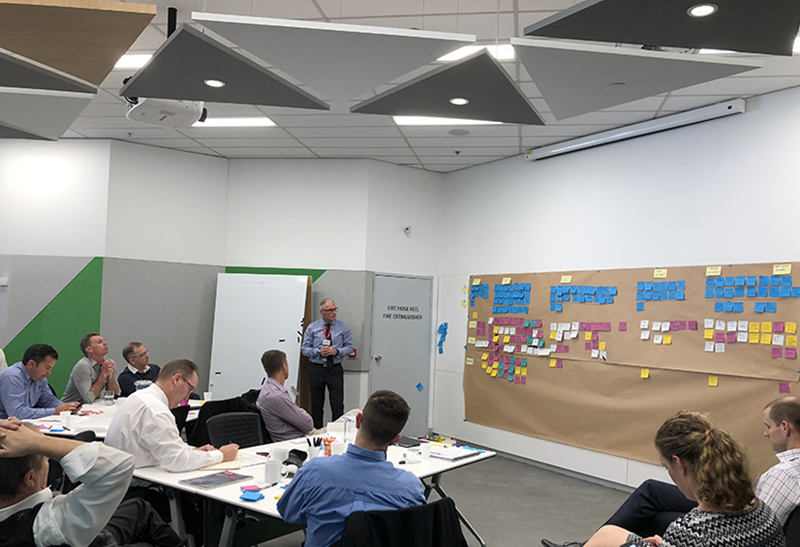
Activity 3.3 - pain points
Purpose: To identify pain points and area of improvement during the process
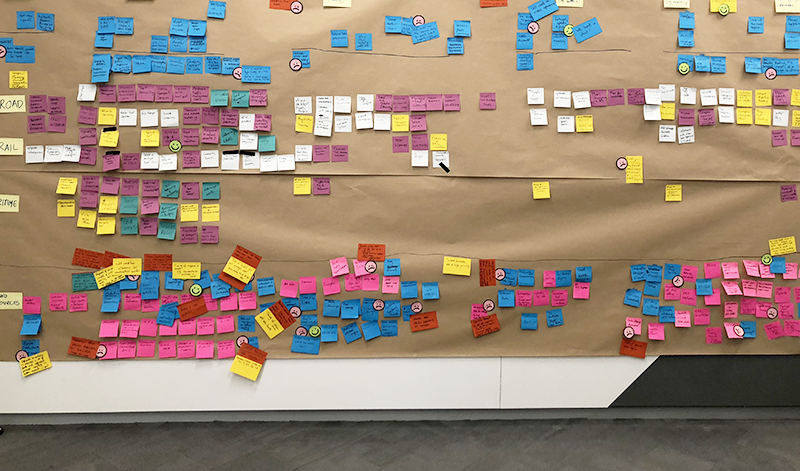
Now that the activity and tasks are lining up with the services (or not lining up). We’ve ask participants to put the sentiments against their task.
We asked TMR participants to think about the services or activities in their journey - are they easy to complete? Difficult?
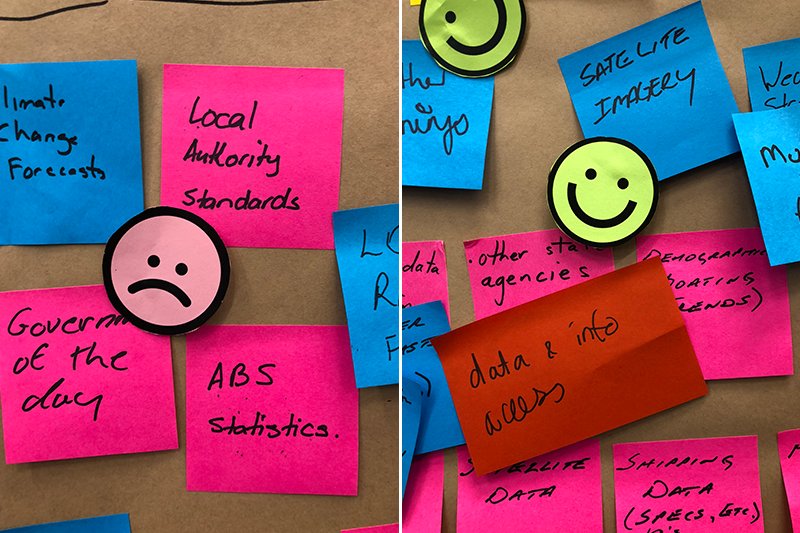
Place where within the journey, how you feel when getting the task done. ‘Sad’ and ‘Happy’ face
TMR staff report back how on their happy and sads. Why did they label them as such?
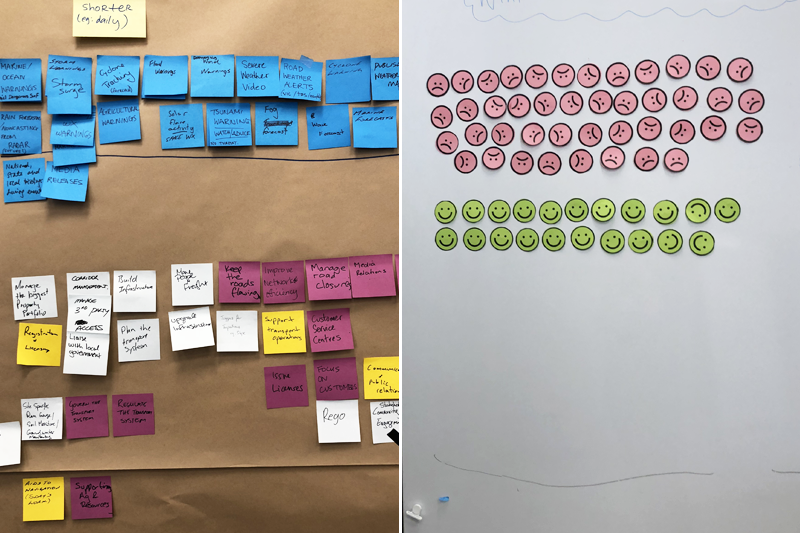
Activity 4 - other sources
Purpose: To identify sources of information
Ask TMR to think about what products or information they use to complete the activities in their journey- BOM products or other products.
TMR staff write each “other” (non -BOM) product they use on a ‘PINK’ post-it and place it in the bottom row of the brown paper template.
Activity 5 - TMR Journey
Purpose: To identify cross-overs within products (BOM and others)
TMR staff (with BOM people observing and helping) replicate the post-its from BOM product section and replicate the Other sources products to the TMR journey process. If someone has already taken it, write the post it again on BLUE.
TMR and BOM staff can discuss in their sector teams
Whole group stands back to look at each sector journey. And nominate someone from your group to present back.
Look for areas of pain where there is no info to help with the activity. Look for areas where there a BOM service that they didn't know about. Once we see what is the left-over post-its and see the gaps on the products, BOM team can start placing additional products that might suits and has not been mentioned within the process/journey.
Summary
Pick and identify which process are pain points and see if there are alignment with BOM services and products
Each sector present back their journey, highlighting pain points, happy points, and explain what activities/decisions they do that are well supported by information and what activities/decisions have little information to support.
TMR: putting the why of the pain points and discuss as the whole group.
BOM: taking notes and response when necessary.
Facilitator: time box and identify if the matter should be discussed separately and who would owned it as further action or if that it can be addressed in the workshop.
Follow up
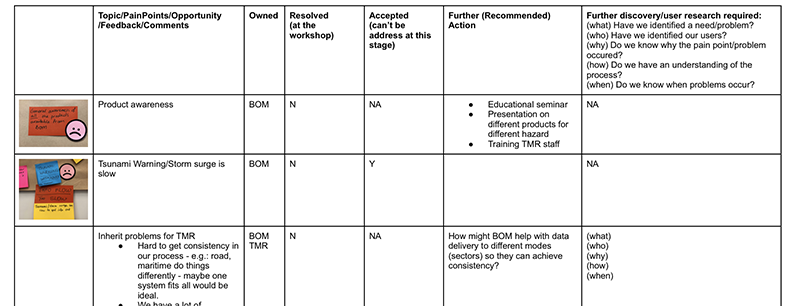
Taking the findings from the workshop, as a team, we placed them in a matrix and listed all the pain points. The business then took it and consider their options from there. There are total of 32 pain points identify.
Outcome
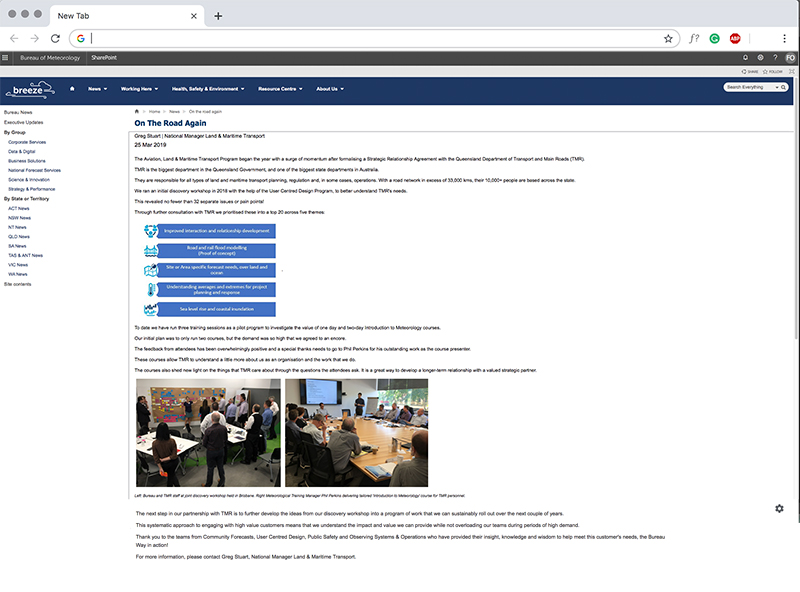
As part of the initiatives, the business has moved in to designing programs the would benefit and improves service offerings for the next 2 -3 years. The National manager Land & Maritime Transport from Bureau of Meteorology has taken steps to improve the partnerships based on the workshop. The immediate effect is to have a 2 days course - introduction to meteorology, along with other solutions including utilising existing products to assist TMR.
Limitations & Iterations
Short workshop compare to the problems that we need to tackle.
Huge areas to explore from variety of different business units from both sides.
It has been an insightful experience to design and facilitate on this workshop and it achieved the objective. Ideally, would like to do more workshop for each individual program or area of opportunities once the business identify the priority. And even to start deep dive in to discovery research for programs within this partnership.